.png)
In recent years, issues related to the management of national reserves have frequently attracted the attention of experts, institutions and citizens, thus becoming an opportunity for reflection on security, autonomy and long-term economic strategies.
Among these questions, some regularly resurface in public debate , raising concerns about how to protect and enhance the country's fundamental resources. The management of gold reserves, in particular, represents a delicate balance between operational imperatives, security considerations, and strategic economic policy choices , within an increasingly complex and evolving international context .
Decisions regarding the custody, relocation , and allocation of these assets not only have financial consequences but also become symbols of autonomy and confidence in a state's ability to protect its resources. In this context, the words and proposals of leading political and economic figures take on particular importance, sparking debates that often involve institutions, analysts, and the public .
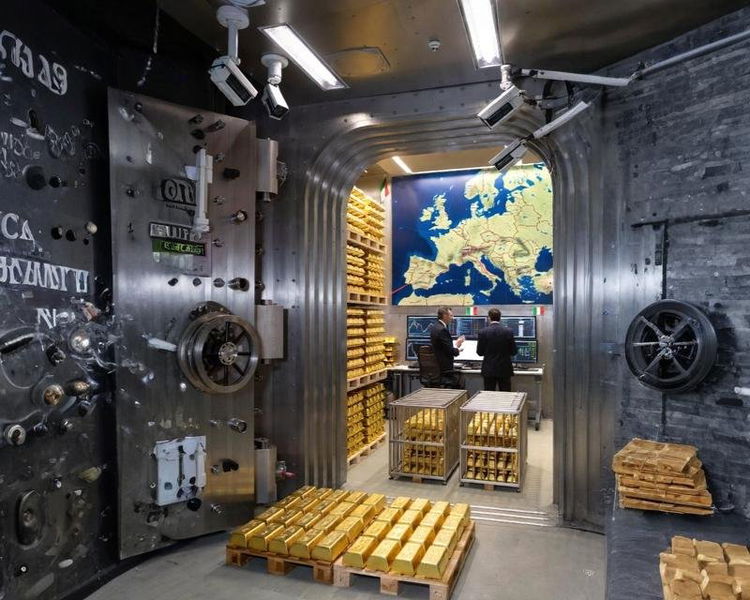
The decision to repatriate a portion of reserves , for example, is not limited to technical or logistical considerations : it touches on issues of national strategy, international risk management, and the perception of economic independence. At a time when the financial world is subject to complex dynamics, market fluctuations , and geopolitical tensions, any proposal in this area generates interest, curiosity, and even debate regarding its potential operational, economic, and symbolic consequences for the country.
Without immediately delving into technical details or operational choices, it is clear that this subject has an importance that goes beyond simple asset management: it concerns the ability to strategically plan, protect, and enhance national resources. The resulting reflection is vast and complex, and fuels the debate on how to combine prudence, strategic vision, and opportunity in a constantly evolving global context, where every decision can have lasting repercussions on the country's future.

Romano Prodi 's speech at the Coldiretti village in Bologna reignited a debate that regularly resurfaces on the Italian economic and financial agenda: the repatriation of gold reserves held abroad. The former Prime Minister emphasized that gold and water represent " matters of strategic prudence ," stressing the need to consolidate economic sovereignty in an international context perceived as uncertain, particularly in light of the political and monetary situation in the United States.
With a pragmatic approach, Prodi cited the French model , highlighting how Paris gradually regained control of its national reserves , transforming this choice into an element of security and a tangible symbol of economic and political independence

Italy currently holds 2,452 tonnes of gold, among the world's largest reserves, with approximately 43% deposited at the Federal Reserve Bank of New York and smaller amounts in Switzerland and the United Kingdom . Diversifying storage locations, as highlighted by the Bank of Italy, helps mitigate risks and ensures the availability of gold in major international financial centers . However, repatriating gold raises numerous complex issues , ranging from transport and insurance logistics to the operational impact on markets, where the physical presence of reserves abroad facilitates rapid exchange or pledging transactions .
A potential repatriation would therefore entail higher costs and rigorous planning , without compromising the strategic objective of more direct control over national assets. The experience of other European countries demonstrates that such operations are possible and feasible. Between 2013 and 2017, the Bundesbank repatriated 674 tons of gold from New York and Paris to Frankfurt, completing the operation ahead of schedule and at a controlled cost, while Austria and the Netherlands have undertaken significant repatriations in recent years. These precedents illustrate how technical and logistical challenges can be overcome, transforming a symbolic gesture into a concrete economic policy intervention. At the same time, Prodi's reflections are situated within a broader context of geopolitical tensions, fluctuating interest rates, and evolving central bank strategies, where gold remains a stable and secure benchmark for safeguarding national assets.
The former Prime Minister's appeal is therefore not merely a symbolic reminder : it also constitutes a concrete reflection on the strategic role of gold reserves in strengthening Italy's financial security and resilience in the face of complex international contexts. The repatriation operation, while not operationally urgent, would send a strong signal of autonomy and attention to the country's resources, stimulating a debate at the intersection of economics, geopolitics, and long-term planning.


0 commentaires:
Enregistrer un commentaire